
1. What does a job recruiter do?
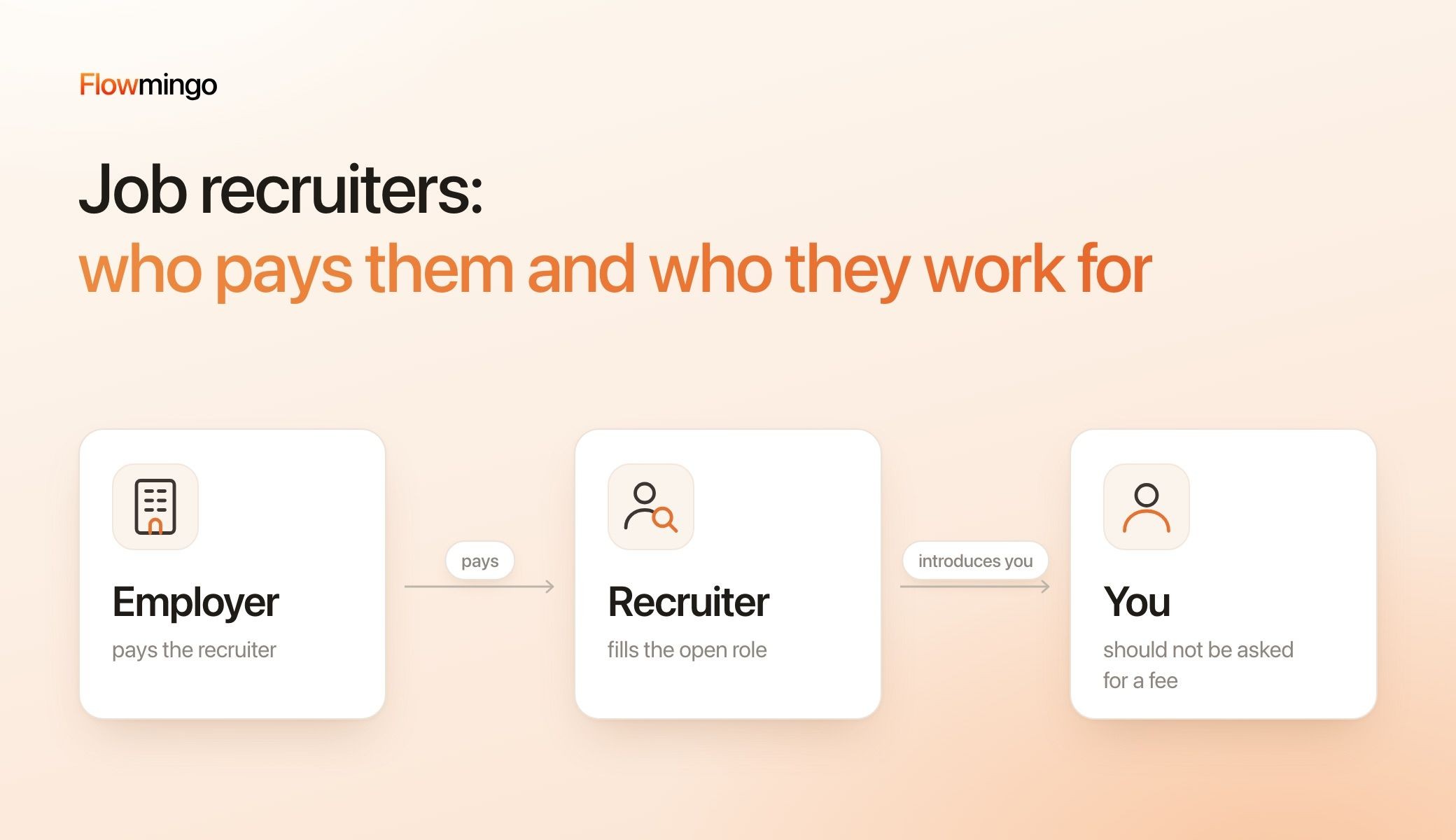
A job recruiter connects people who want a job with employers who need to fill a role. The recruiter's client is the employer, not you. Their job is to find someone who fits the opening, so they help you as far as that helps the match.
That is why a recruiter works best next to your own search, not instead of it. Keep applying, keep your network warm, and treat the recruiter as one more door.
2. Who pays a job recruiter?
The employer pays. A corporate recruiter is on the company's payroll. An agency recruiter is paid by the client company that uses the agency. Either way, a recruiter should not charge you anything, and a recruiter who asks you for money is a red flag.
3. What kinds of job recruiters will you meet?
- Corporate (in-house) recruiter. Works inside one company and fills that company's roles.
- Agency recruiter. Works for an outside firm that fills roles for several client companies.
- Contingency recruiter. Is paid only if a company hires one of their candidates, so they are motivated to make a placement.
- Retained recruiter. Is hired by a company for a specific role and is paid for the search. Retained recruiters usually work closely with that employer.
You will also hear the word headhunter. It usually means a recruiter who searches for senior, executive or specialised hires, often on retainer.
4. How do you find a job recruiter in your field?
- Start with the job posts you already like. When you apply, note the name of the recruiter or agency that posted the role, so you know who to follow up with.
- Search by field and place. On a job site or on LinkedIn, search for "recruiter" plus your field and your city, for example "healthcare recruiter Chicago". Many recruiting firms list the fields they cover on their own websites.
- Answer the recruiters who write to you. Even when the role is wrong for you, ask which fields they cover and whether they work with people at your level.
- Ask your network. Colleagues, former managers and professional groups often know recruiters they have had good experiences with.
- Look for a recruiter who knows your field. Recruiters who focus on one area, such as IT, healthcare or finance, understand your work and can speak for you.
- Check their reputation. Read their profile, their firm's website and reviews before you share your CV.
5. What should you ask a recruiter before you work together?
- Which companies and roles do you fill, and are any of them a fit for me?
- Will you tell me the company name before you submit my CV?
- How often will you contact me, and how?
- What do you need from me to move quickly?
- What happens after a first interview, and who gives me feedback?
6. What are the red flags?
- They ask you to pay.
- They push you toward a role that does not match what you told them.
- They will not name the employer or share reasonable detail about the role.
- You cannot reach them by phone or email.
- They send your CV to a company without telling you which one.
7. Can two recruiters send your CV to the same job?
When two recruiters submit the same CV to the same role, the employer often rejects the duplicate. Tell each recruiter which companies they may approach. One recruiter per company is enough, so more recruiters does not mean more chances.
8. What happens on the first call, and how do you prepare?
Expect a conversation of about 15 to 30 minutes about your work history, skills and what you want next. Expect a question about your pay expectations early, before any offer exists, so research the going range for your role first.
Before the call, write down:
- A one-minute summary of your work and the role you want
- Your pay range, location or remote limits and when you could start
- Two or three things you are proud of, with a real example for each
With Flowmingo, a company can start with an AI screening interview instead of a phone call. Formats differ: in some, an AI interviewer talks with you and may follow up on your answers; in others you only record short answers. Either way, your answers are evaluated or reviewed afterwards and go to the company. If a company invites you to a Flowmingo AI interview, you can watch a short guide to the interview room before you start, and a paid Premium Practice run in the same room is available; some companies cover it for you. Treat any practice as a first look, not a copy of your real interview. For what a screening interview asks and how it is scored, read our screening interview guide.
9. Frequently asked questions
Do job seekers pay recruiters?
No. Employers pay recruiters, so you should not be asked for a fee.
Can I work with more than one recruiter?
Yes, but be careful. Tell each recruiter which companies they may approach, so two of them do not send your CV to the same job.
What is the difference between a recruiter and a headhunter?
A headhunter usually means a recruiter who searches for senior, executive or specialised hires, often on retainer. Other recruiters fill a wider range of jobs.
Should I tell a recruiter my pay range?
Expect to be asked early. Look up the going range for your role first, then give a range you are comfortable with.
10. Sources
- Manpower, "What are the 5 keys to working with a recruiter?", read 23 Nov 2026: https://www.manpower.com/en/insights/blogs/5-keys-to-working-with-a-recruiter
- SuccessWorks, University of Wisconsin-Madison, "Working with recruiters and staffing agencies", read 23 Nov 2026: https://successworks.wisc.edu/finding-a-job-or-internship/working-with-recruiters-and-staffing-agencies/
- Recruiter.com, "Job recruiters: working with a recruiter for a successful job search", read 23 Nov 2026: https://blog.recruiter.com/job-recruiters-job-search
- Deel, "Job recruiter", read 23 Nov 2026: https://www.deel.com/glossary/job-recruiter/
- TopResume, "15 expert tips for how to work with a recruiter", read 23 Nov 2026: https://www.topresume.com/career-advice/5-tips-for-effectively-working-with-a-recruiter