
On this page
- The short answer
- Pricing
- The AI interview
- What your applicants experience
- What comes back after each interview
- Integrations and workflow
- Scoring and data
- Which should you choose?
- Moving from HackerEarth
Reference
The short answer
HackerEarth now presents its AI Interview Agent as OnScreen. The current product combines an AI conversation with technical exercises and identity verification. FaceCode is a separate live-interview product and should not be substituted for the autonomous OnScreen workflow[1,3].
Flowmingo combines AI interview evidence with an included hiring workflow. Applicants answer spoken questions and follow-ups on video, and recruiters review the recording, transcript and written scoring reasons. Technical Tests support executable coding questions, so the comparison is about how the assessment is delivered and reviewed.
OnScreen is worth evaluating when technical work and identity verification need to be part of the AI interview. Flowmingo provides an unlimited Free interview baseline and a separate technical-assessment capability. Compare the actual exercise, candidate requirements and evidence your hiring manager receives, rather than choosing from a coding-versus-no-coding checkbox[1].
3 more differences worth knowing
Use the current OnScreen offer
HackerEarth’s current page lists Growth from $129/month and Scale from $499/month. Older Interview Agent pricing can describe a different offer. Confirm the current package and included interviews before budgeting[1].
See the detailDecide where coding belongs
OnScreen describes coding and technical reasoning inside its AI interview. Flowmingo offers executable Technical Tests alongside AI interviews. The arrangement matters when you want to connect a candidate’s working solution with their explanation[1].
See the detailIdentity checks affect the candidate journey
OnScreen advertises government-ID verification, face matching and continued identity checks. Decide whether those controls fit the role and candidate population, and explain the required steps before inviting applicants[1].
See the detail
Pricing: what each one costs you
The current OnScreen tiers meter interviews taken.
On 4 October 2026, HackerEarth’s current OnScreen page listed Growth from $129/month for 10 interviews and Scale from $499/month for 50 interviews, with custom enterprise pricing. The page distinguishes interviews taken from invitations sent. The dollar amounts below retain the currency notation shown by the vendor[1].
| What | HackerEarth |  |
|---|---|---|
| Growth | From $129/month; 10 interviews per month[1] | Free US$0; Starter US$49/month; Growth US$99/month; AI interviews stay unlimited |
| Scale | From $499/month; 50 interviews per month[1] | Ongoing Free plan with unlimited AI interviews, hiring projects and team members |
| Enterprise | Custom pricing[1] | Confirm any requirements beyond the published plans |
| Billing unit | Interviews taken rather than invitations sent[1] | AI interviews do not consume a volume allowance |
| Seats | Confirm reviewer seats and permission limits in the quote[1] | Unlimited team members; Owner, Admin and Member roles |
| Evaluation offer | Confirm current pilot or trial terms; no allowance inferred[1] | Ongoing Free plan with no trial deadline |
| Annual commitment | No annual equivalent used in this comparison[1] | Compare paid billing terms separately from the Free interview allowance |
The word “from” matters. It identifies the entry rate shown on the product page, not a guarantee that every integration, identity check or enterprise requirement is included. Ask for the exact role coverage, interview duration, overage rate and verification charges that apply to your hiring program. Do not turn a headline package into an all-inclusive per-candidate claim[1].
A ten-interview allowance can be useful for a small evaluation, but production planning should use the number of applicants who will actually take the interview. Include seasonal peaks and repeated assessments in the commercial discussion. Request clear treatment of technical interruptions and retries, because those events can affect both candidate experience and the eventual invoice.
Flowmingo keeps the interview allowance unlimited on every plan. Its paid upgrades concern other parts of the workflow, including branded sharing, downloads and recording retention. Free retains the latest 300 interview videos for 30 days while scores and transcripts remain available. That rolling video window is a storage condition, not a cap of 300 interviews.
Flowmingo's plans: Free is $0 with unlimited AI interviews. Starter ($49 a month) and Growth ($99 a month) add your brand on what you share, downloads, longer assessments and longer-kept interview videos. See pricing.
How these numbers were worked out
- Current OnScreen page checked directly on 4 October 2026[1].
- Older cached Interview Agent rates are excluded.
- No invented enterprise total, annual discount or saving percentage is shown.
The AI interview: technical work inside the conversation
OnScreen describes adaptive voice or video interviews with coding, debugging and system-design tasks. It also advertises configuration for nontechnical roles. FaceCode’s AI chat assistant belongs to the human-led interview product; it should not be mistaken for the OnScreen interviewer[1,2,3].

| What | HackerEarth | |
|---|---|---|
| Interviewer | Autonomous conversational AI with voice/video avatars[1] | Spoken AI questions and follow-ups; applicants record video answers in their own time |
| Role configuration | Questions and rubric configured from the role[1] | Generate 1-30 questions from the job description, then edit questions and evaluation criteria |
| Coding environment | Live coding environment within the technical workflow[1] | Technical Tests with executable coding questions and sandbox verification, alongside AI interviews |
| Reasoning | System design and debugging tasks advertised[1] | Ask role-specific follow-ups; assess code separately where needed |
| Specialized roles | Examples include embedded, RTL, full-stack and AI engineering[1] | Configure the interview and Technical Test for the role |
| Nontechnical hiring | Sales, support and other role configurations advertised[1] | Behavioral, situational and experience questions tailored to the job |
| Human-led alternative | FaceCode is a distinct live-interview product[3] | Interview Companion supports recruiter-led browser calls; confirm installation and availability for your team |
Ask the candidate to explain a decision made during the exercise. An integrated technical interview is most useful when the conversation reveals why the candidate chose a particular implementation, how they tested it and which trade-offs they recognized. A working program and a fluent explanation should remain separate pieces of evidence until the reviewer has looked at both.
For Flowmingo, define what the Technical Test evaluates and what the AI interview should explore afterward. For OnScreen, inspect how the code, conversation and scoring rubric appear in the same result. Neither arrangement automatically produces a more valid assessment: the quality depends on the task, criteria and review process you configure. Keep a practical work sample proportional to the responsibilities of the role.
What your applicants experience
The most distinctive OnScreen candidate step is identity verification. HackerEarth describes government-ID checks, including DigiLocker in India and document checks in other regions, followed by face matching and continued verification. These are identity controls, separate from evaluating job-related answers[1].
Tell applicants about ID requirements before the interview starts. A candidate may need a supported document, a working camera and an appropriate device for code execution. Test those steps with the population you actually recruit, including candidates outside your main country. Offer a clear contact route when a legitimate applicant cannot complete verification.
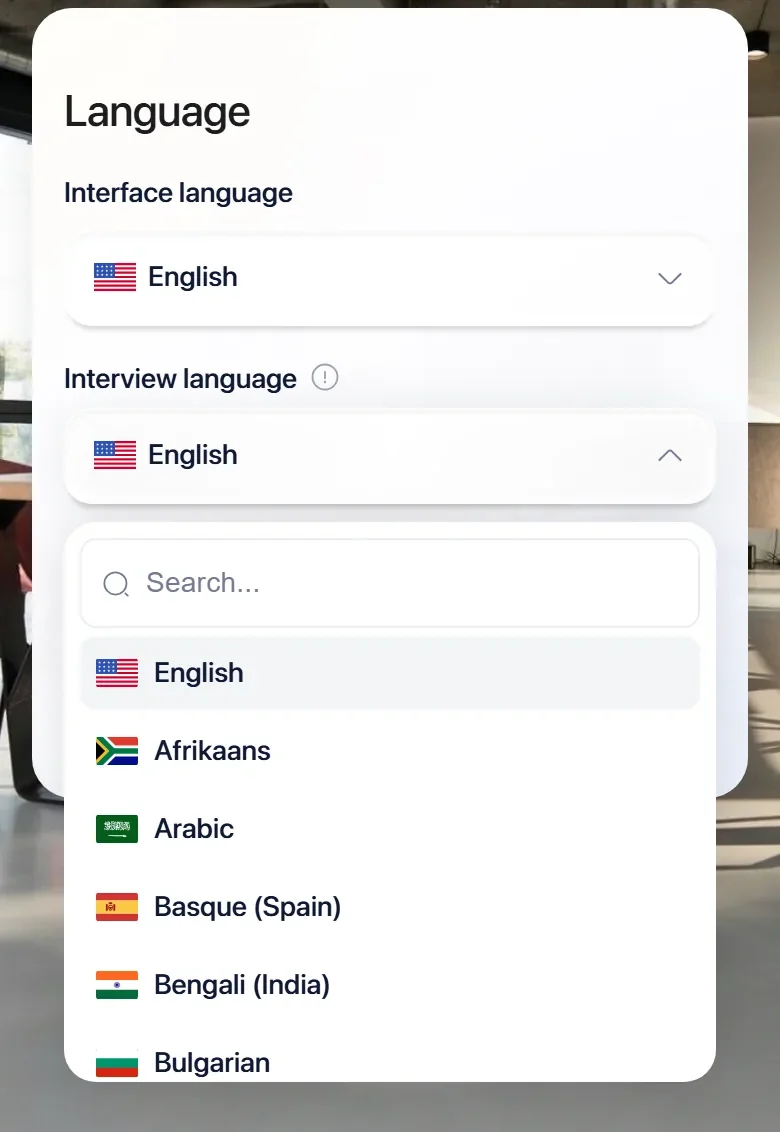
A mobile-friendly invitation does not establish that a complex coding exercise is practical on a phone. Likewise, Flowmingo’s WhatsApp invitation option opens the browser interview; it is available to enabled, eligible paid organizations with messaging credits and does not turn the assessment into a WhatsApp chat. Keep the delivery channel and assessment environment distinct in candidate instructions.
| What | HackerEarth | |
|---|---|---|
| Participation | AI voice/video interview with role-specific tasks[1] | Phone or laptop browser, with camera and microphone checks for the AI video interview |
| Scheduling | Always-available AI interviewing advertised[1] | Applicant completes the interview without a recruiter appointment |
| Identity documents | Government-ID verification; regional process varies[1] | Confirm the identity process required for your hiring use |
| Liveness | Face match and live-presence checks advertised[1] | Review available interview evidence and assessment controls |
| Practice | Candidate practice experience advertised[1] | Explain the interview format and device checks before starting |
| Languages | Confirm language availability for the selected role and avatar[1] | 60+ spoken interview languages; applicants choose from those you allow |
| Invitations | Confirm the connected ATS and candidate entry flow[1] | Email invitations and reminders; WhatsApp invitations for enabled, eligible paid organizations, with messaging credits |
What comes back after each interview
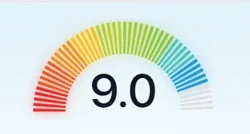
OnScreen advertises structured scoring supported by the conversation and technical work. HackerEarth says evaluation focuses on skills, code and reasoning rather than facial expression or sentiment. Flowmingo similarly gives recruiters evidence to inspect instead of treating the overall number as a hiring decision[1].
| What | HackerEarth | |
|---|---|---|
| Scoring basis | Role rubric, skills, code and reasoning[1] | Criterion scores with written reasons; overall score reflects the importance you assign |
| Transcript | Interview transcript supports recruiter review[1] | Transcript alongside recorded answers |
| Technical output | Coding and task evidence in the assessment workflow[1] | Executable Technical Test evidence alongside AI interview reports |
| Integrity evidence | Identity and interview-integrity signals advertised[1] | Check available controls separately from the criterion score |
| Expression analysis | Vendor says facial expression, tone and sentiment are not scoring inputs[1] | Review written reasons against the job criteria |
| Sharing | Reports and results can flow into connected ATS workflows[1] | Report links on Free; downloads and branded sharing on paid plans; CSV export on Growth |
| Selection | Human review of the assessment evidence[1] | Recruiters review the evidence and decide who moves forward |


 Overall score
A verified identity and a strong job-related answer solve different problems. Keep identity exceptions out of the competency score unless your process explicitly explains their meaning and allows review. When a candidate receives a low technical result, look for the specific mistake or missing reasoning in the evidence. A generic label such as “weak fit” is less useful than an explanation a hiring manager can defend from the work itself.
Integrations and workflow
| What | HackerEarth | |
|---|---|---|
| Named ATS connections | Workday, Greenhouse, Lever and Ashby advertised[1] | API, webhooks and MCP for custom integrations on every plan |
| Result handoff | Scores, reports and integrity information in the integration workflow[1] | Map applicant IDs, completion and report links through your connection |
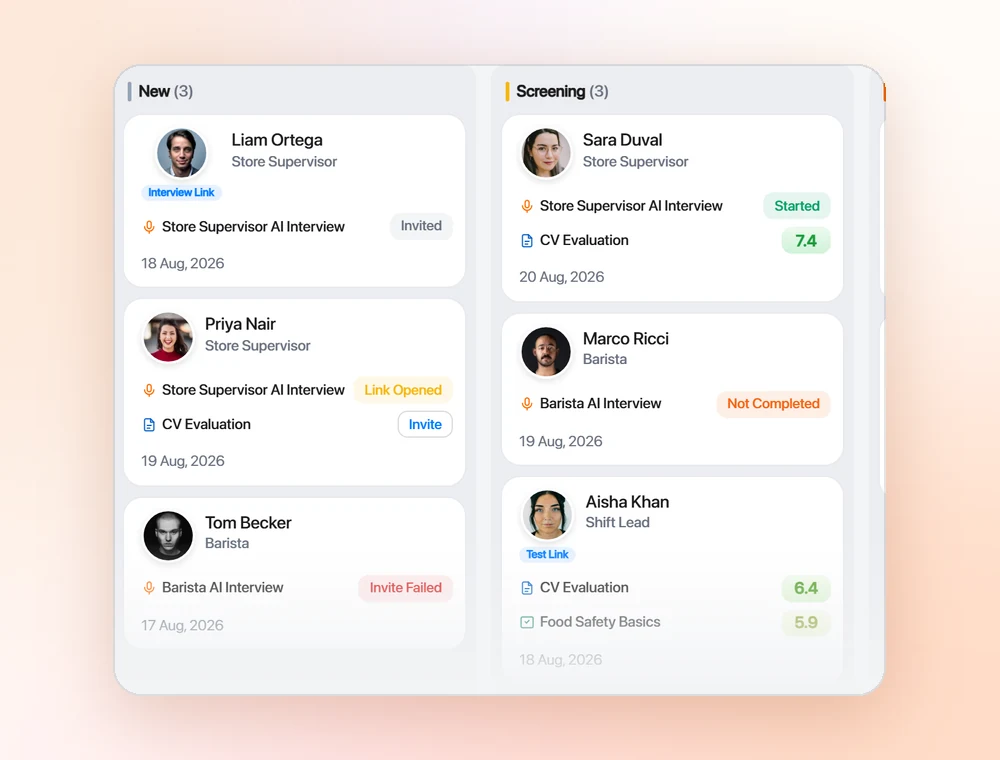
| Candidate tracking | OnScreen operates in the employer’s hiring process[1] | Built-in applicant tracking, hiring stages, notes and team review |
| Review team | Confirm seats and access controls in the selected package[1] | Unlimited team members; Owner, Admin and Member roles |
| Custom connection | API connectivity advertised[1] | API, webhooks and MCP on every plan |
| Product selection | OnScreen and FaceCode serve different interview workflows[1,3] | AI interviews, Technical Tests and qualified Companion availability |
Specify what must arrive in the ATS. For a technical role, a score alone may be insufficient: the reviewer may need the code, transcript, integrity explanation and a stable report link. Demonstrate those fields using a test applicant, including who can open the result. Flowmingo’s custom integration options should be assessed on the same basis; a public API does not eliminate mapping and access-control work.
Scoring, oversight and candidate data
Identity verification deserves its own review
OnScreen’s identity controls create a different data and operational footprint from a basic interview link. Review the ID-verification process, provider responsibilities and exception handling in addition to ordinary interview consent and retention[1].
Do not use a product-page identity claim as proof of a completed security or fairness assessment. Ask which data is stored, which verification provider processes it and how an applicant can challenge a mismatch. Restrict access to identity documents separately where required. A candidate who cannot pass an automated check may need a different verification route, not an unexplained failure in the hiring pipeline.
| What | HackerEarth | |
|---|---|---|
| Identity purpose | Government-ID and face checks address impersonation[1] | Establish which identity evidence is necessary for the role |
| Skill evaluation | Vendor separates job-skill evaluation from expression analysis[1] | Scores should be reviewed against written job criteria |
| Integrity flags | Continued verification can produce review signals[1] | Review evidence before making an adverse decision |
| Retention | Confirm ID, video, code and transcript retention separately[1] | Free retains the latest 300 interview videos for 30 days; scores and transcripts remain available |
| Contract scope | Request current data-processing and security documentation[1] | Published Privacy Policy and Data Processing Agreement; confirm your retention and deletion requirements |
| Final oversight | Set a human review and candidate-exception process[1] | Recruiters review the evidence and decide who moves forward |
Which should you choose?
| If you are | Pick | Why |
|---|---|---|
| You want coding and an adaptive interview in one technical session | HackerEarth | OnScreen advertises that combined workflow; inspect the exact task and resulting evidence[1]. |
| You require government-ID checks during screening | HackerEarth | OnScreen explicitly advertises regional ID verification and face matching[1]. |
| You need unlimited ongoing interview volume | Flowmingo | Free does not meter AI interviews. |
| You need executable technical assessments | Either | Both support technical work; compare environments, task quality and reviewer evidence. |
| Your team wants an included hiring pipeline | Flowmingo | Applicant tracking and unlimited reviewers are included. |
| Candidates need an accessible alternative to the default verification route | Either | Establish the accommodation and exception process before selecting or deploying either workflow. |
Moving from HackerEarth: test one role first
Keep the technical task and competency definitions consistent during a pilot. The first question is whether reviewers receive better evidence, not whether the new interface looks more automated.
- Choose one representative technical roleSelect the actual coding, debugging or design task and state the evidence you expect from the explanation.
- Complete verification as a candidateTest regional ID support, camera checks, task setup and an interruption. Record the exception route and support contact.
- Compare the work with the reportReview the code, transcript and criterion reasons together. Ask whether the score reflects the candidate’s demonstrated work.
- Validate handoff and commercial termsRun the applicant through the ATS and confirm seats, interview allowance, retry treatment, verification scope and retention before expanding.
Pilot it on 1 role this week. Unlimited AI interviews in 60+ languages, for $0.
Start Hiring FreeThe full comparison, point by point
For the procurement checklist: all 40 points, with a source on each. Open a group.
Price and plan limits7 points
| What | HackerEarth | |
|---|---|---|
| Growth | From $129/month; 10 interviews per month[1] | Free US$0; Starter US$49/month; Growth US$99/month; AI interviews stay unlimited |
| Scale | From $499/month; 50 interviews per month[1] | Ongoing Free plan with unlimited AI interviews, hiring projects and team members |
| Enterprise | Custom pricing[1] | Confirm any requirements beyond the published plans |
| Billing unit | Interviews taken rather than invitations sent[1] | AI interviews do not consume a volume allowance |
| Seats | Confirm reviewer seats and permission limits in the quote[1] | Unlimited team members; Owner, Admin and Member roles |
| Evaluation offer | Confirm current pilot or trial terms; no allowance inferred[1] | Ongoing Free plan with no trial deadline |
| Annual commitment | No annual equivalent used in this comparison[1] | Compare paid billing terms separately from the Free interview allowance |
The interview7 points
| What | HackerEarth | |
|---|---|---|
| Interviewer | Autonomous conversational AI with voice/video avatars[1] | Spoken AI questions and follow-ups; applicants record video answers in their own time |
| Role configuration | Questions and rubric configured from the role[1] | Generate 1-30 questions from the job description, then edit questions and evaluation criteria |
| Coding environment | Live coding environment within the technical workflow[1] | Technical Tests with executable coding questions and sandbox verification, alongside AI interviews |
| Reasoning | System design and debugging tasks advertised[1] | Ask role-specific follow-ups; assess code separately where needed |
| Specialized roles | Examples include embedded, RTL, full-stack and AI engineering[1] | Configure the interview and Technical Test for the role |
| Nontechnical hiring | Sales, support and other role configurations advertised[1] | Behavioral, situational and experience questions tailored to the job |
| Human-led alternative | FaceCode is a distinct live-interview product[3] | Interview Companion supports recruiter-led browser calls; confirm installation and availability for your team |
Candidate experience7 points
| What | HackerEarth | |
|---|---|---|
| Participation | AI voice/video interview with role-specific tasks[1] | Phone or laptop browser, with camera and microphone checks for the AI video interview |
| Scheduling | Always-available AI interviewing advertised[1] | Applicant completes the interview without a recruiter appointment |
| Identity documents | Government-ID verification; regional process varies[1] | Confirm the identity process required for your hiring use |
| Liveness | Face match and live-presence checks advertised[1] | Review available interview evidence and assessment controls |
| Practice | Candidate practice experience advertised[1] | Explain the interview format and device checks before starting |
| Languages | Confirm language availability for the selected role and avatar[1] | 60+ spoken interview languages; applicants choose from those you allow |
| Invitations | Confirm the connected ATS and candidate entry flow[1] | Email invitations and reminders; WhatsApp invitations for enabled, eligible paid organizations, with messaging credits |
Reports and evaluation7 points
| What | HackerEarth | |
|---|---|---|
| Scoring basis | Role rubric, skills, code and reasoning[1] | Criterion scores with written reasons; overall score reflects the importance you assign |
| Transcript | Interview transcript supports recruiter review[1] | Transcript alongside recorded answers |
| Technical output | Coding and task evidence in the assessment workflow[1] | Executable Technical Test evidence alongside AI interview reports |
| Integrity evidence | Identity and interview-integrity signals advertised[1] | Check available controls separately from the criterion score |
| Expression analysis | Vendor says facial expression, tone and sentiment are not scoring inputs[1] | Review written reasons against the job criteria |
| Sharing | Reports and results can flow into connected ATS workflows[1] | Report links on Free; downloads and branded sharing on paid plans; CSV export on Growth |
| Selection | Human review of the assessment evidence[1] | Recruiters review the evidence and decide who moves forward |
Integrations and team6 points
| What | HackerEarth | |
|---|---|---|
| Named ATS connections | Workday, Greenhouse, Lever and Ashby advertised[1] | API, webhooks and MCP for custom integrations on every plan |
| Result handoff | Scores, reports and integrity information in the integration workflow[1] | Map applicant IDs, completion and report links through your connection |
| Candidate tracking | OnScreen operates in the employer’s hiring process[1] | Built-in applicant tracking, hiring stages, notes and team review |
| Review team | Confirm seats and access controls in the selected package[1] | Unlimited team members; Owner, Admin and Member roles |
| Custom connection | API connectivity advertised[1] | API, webhooks and MCP on every plan |
| Product selection | OnScreen and FaceCode serve different interview workflows[1,3] | AI interviews, Technical Tests and qualified Companion availability |
Oversight and candidate data6 points
| What | HackerEarth | |
|---|---|---|
| Identity purpose | Government-ID and face checks address impersonation[1] | Establish which identity evidence is necessary for the role |
| Skill evaluation | Vendor separates job-skill evaluation from expression analysis[1] | Scores should be reviewed against written job criteria |
| Integrity flags | Continued verification can produce review signals[1] | Review evidence before making an adverse decision |
| Retention | Confirm ID, video, code and transcript retention separately[1] | Free retains the latest 300 interview videos for 30 days; scores and transcripts remain available |
| Contract scope | Request current data-processing and security documentation[1] | Published Privacy Policy and Data Processing Agreement; confirm your retention and deletion requirements |
| Final oversight | Set a human review and candidate-exception process[1] | Recruiters review the evidence and decide who moves forward |
Questions buyers ask
Is HackerEarth AI Interview Agent now OnScreen?
The current HackerEarth AI interviewing page presents the product as OnScreen. This comparison uses that current product and its published offer rather than older cached Interview Agent pricing[1].
Is FaceCode the same autonomous interviewer?
No. FaceCode is HackerEarth’s live-interview product. Its AI chat assistance should not be confused with OnScreen’s autonomous interview workflow[2,3].
Does OnScreen assess facial expressions?
The current page distinguishes face matching for identity from skill evaluation and says facial expression, tone and sentiment are not scoring inputs. Ask for the applicable documentation and configuration when reviewing the product[1].
Does Flowmingo also execute code?
Yes. Technical Tests support executable coding questions with sandbox verification. Evaluate how those tests and the AI interview fit your technical selection process.
Can OnScreen interview nontechnical candidates?
HackerEarth advertises role configuration beyond engineering, including sales and support. Ask to see the exact nontechnical role, rubric and candidate experience you intend to use[1].
Sources and method
This comparison was updated on 4 Oct 2026. Competitor claims link to HackerEarth's own pages or a named third party; ratings carry their own checked dates. Flowmingo facts come from our pricing, the AI Interviewer page, a sample report, our Data Processing Agreement and our Privacy Policy. Spotted something out of date? Tell us below and we fix it.
All 3 sources
- 1 HackerEarth OnScreen: current product, KYC, integrations and pricing FAQ. hackerearth.com
- 2 HackerEarth help: AI chat in live interviews. help.hackerearth.com
- 3 HackerEarth help: FaceCode live interviewing. help.hackerearth.com
What changed, and when
- First published comparison covering current product scope, pricing, candidate experience, evidence and hiring workflow, with first-party sources.