
On this page
- The short answer
- Pricing
- The AI interview
- What your applicants experience
- What comes back after each interview
- Integrations and workflow
- Scoring and data
- Which should you choose?
- Moving from TheySaid
Reference
The short answer
TheySaid's AI interview is a research method. Its Evo moderator explores a learning goal, probes participant answers and helps the team collect qualitative feedback. The surrounding workspace includes surveys, forms and user testing. A qualitative questionnaire is not, by itself, evidence of a recruitment assessment engine[1,6].
Flowmingo's AI interview is part of a hiring process. Recruiters define what a role requires, applicants answer questions and reviewers compare evidence against those criteria. The report includes scores and written reasons, while a hiring tracker keeps candidates and stages together. Free includes unlimited interviews, hiring projects and team members.
Start with the decision you need to make. If the question is why candidates abandon your application form, a research conversation is relevant. If the question is whether a particular applicant demonstrates a required skill, a scored hiring interview is relevant. Using the same word for both conversations should not hide that difference[1].
2 more differences worth knowing
Learning from a group or assessing a person
TheySaid organizes qualitative research and feedback. Flowmingo produces role-specific candidate evaluations. Research themes should not be treated as applicant-fit scores[1,6].
See the detailA response allowance is not an interview allowance
TheySaid publishes several research packages. Confirm the project type and AI Interview entitlement. Flowmingo's core allowance is unlimited AI interviews, rather than a monthly research-response quota[2,3].
See the detail
Pricing: what each one costs you
Compare the research project or hiring workflow you actually need.
TheySaid publishes separate research pricing pages. Its survey page lists Free, Essential, Pro and Team packages; its main pricing page emphasizes user testing and enterprise scope. These should not be collapsed into a single price for every type of AI interview[2,3].
| What | TheySaid |  |
|---|---|---|
| Free access | Survey page lists 50 monthly responses and one active project[2] | Unlimited AI interviews, projects and team members |
| Entry paid plan | Essential listed at US$49/month with 250 responses[2] | Starter US$49/month |
| Pro | US$149/month; confirm response and AI Interview entitlement[2] | Growth US$99/month |
| Team or enterprise | Team from US$499/month; other enterprise terms quoted[2,3] | Match required branding, retention and sharing to plan |
| Usage unit | Responses, projects and research-specific allowances[2,3] | Interview volume is unlimited on every plan |
| Research seats | Seat limits differ by package[2] | Unlimited hiring-team members |
Ask the vendor to identify the package for the proposed study. An allowance for surveys or user tests does not necessarily establish access to every AI-moderated interview feature. Confirm whether the research project uses advanced interviews, how a response is counted and which follow-up settings are included. Keep that written scope with the quote so the pilot does not depend on an assumed entitlement.
The survey pricing page and the main pricing page describe different product packaging. Compare the number of active projects, participant responses, research seats and required integrations rather than taking the lowest number from one page and the broadest features from another. If a plan's headline and detailed allowance appear inconsistent, obtain confirmation before calculating cost for a large study[2,3].
A hiring comparison needs a different denominator. Flowmingo's core interview volume is unlimited, but the team still spends time preparing questions and reviewing evidence. A TheySaid research study produces learning across participants, not a set of verified candidate-fit decisions. Cost per completed research response and cost per reviewed applicant answer different business questions.
For an HR team using both tools, budget them against separate outcomes. A candidate-experience study might run periodically to improve the application process, while hiring interviews run whenever a vacancy attracts applicants. Combining those expenses can make either product appear unnecessarily expensive. Assess whether each workflow produces useful decisions, and avoid assuming that one subscription should replace both.
Flowmingo's plans: Free is $0 with unlimited AI interviews. Starter ($49 a month) and Growth ($99 a month) add your brand on what you share, downloads, longer assessments and longer-kept interview videos. See pricing.
How these numbers were worked out
- First-party research and pricing pages checked on 4 October 2026.
- Survey, user-testing and AI Interview allowances are not assumed interchangeable.
- No claim is made that the Free research plan includes 50 full advanced interviews.
- Published prices are separated from enterprise quotes and unconfirmed entitlements.
The AI interview: a research moderator or a role-based interviewer
TheySaid's Evo moderator can pursue a learning goal and adjust the depth of follow-up questioning. Flowmingo asks spoken questions and follow-ups to collect evidence against hiring criteria. Both are conversational, but they are configured to produce different kinds of useful answers[1].

| What | TheySaid | |
|---|---|---|
| Starting point | Research goal and interview questions[1] | Job description, questions and assessment criteria |
| Follow-ups | Configurable depth per question[1] | Adaptive follow-ups during the spoken interview |
| Response mode | Voice or typed participation, depending on settings[1] | Spoken asynchronous browser interview |
| Logic | Research branching and configured conversation actions[1] | Role-based interview and evaluation setup |
| Success measure | Depth and usefulness of participant insight | Evidence of the applicant's skills and experience |
| Evaluation | Qualitative research output[6] | Criterion ratings with written reasons |
The same opening question can lead to different follow-ups. A research moderator asking about a difficult application form should explore where the participant became confused and what they expected. A hiring interviewer asking about a difficult project should establish the applicant's actions, reasoning and results. The conversation may sound similar while serving a different decision.
For research, avoid leading the participant toward the product team's preferred explanation. Use the moderator settings to explore an unexpected answer rather than repeatedly confirm the original hypothesis. For hiring, make sure the follow-up elicits evidence for the criterion without coaching the applicant. In both cases, inspect the actual exchange instead of judging the tool from a polished demonstration.
A long response is not automatically a useful response. Research needs relevant detail and recurring or surprising themes; hiring needs specific evidence of role requirements. Agree what a successful answer looks like before the pilot. That helps reviewers distinguish a fluent conversation from one that genuinely changes their understanding or hiring judgment.
What your applicants experience
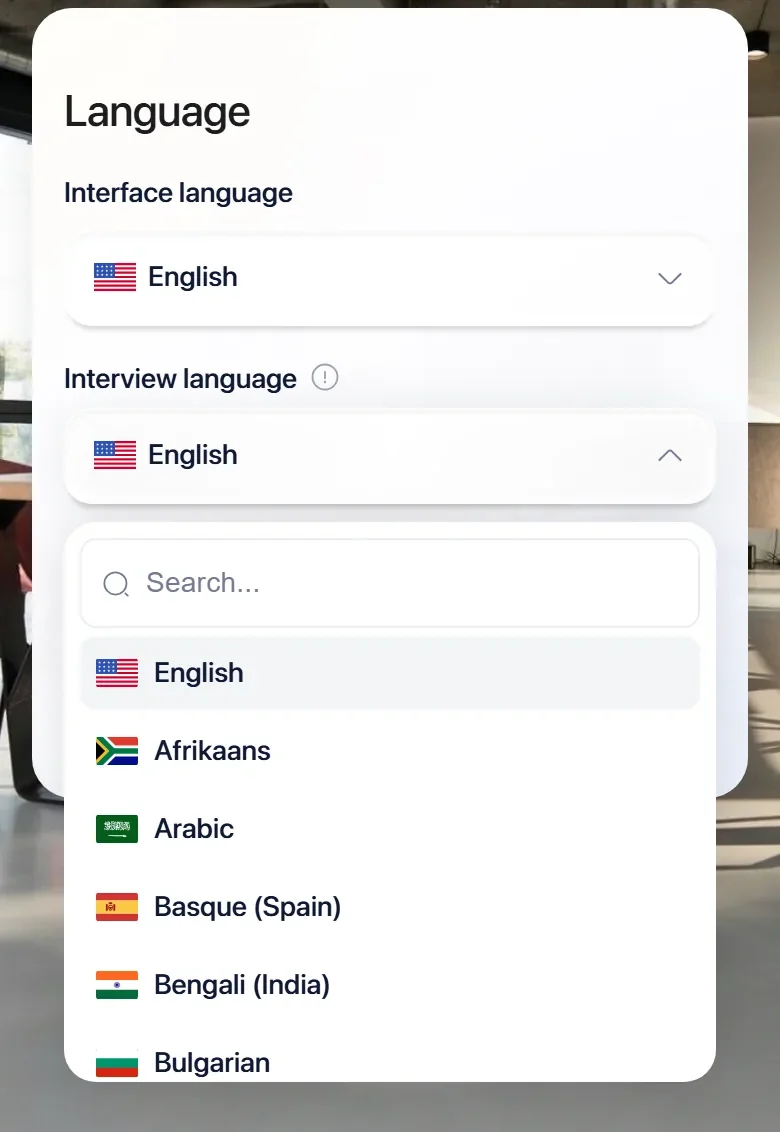
TheySaid treats the person answering as a research participant and offers voice and text settings. Flowmingo treats the person as an applicant completing a hiring assessment. The invitation should make that purpose explicit, especially if an employer uses a research tool to collect candidate-experience feedback[1].
Keep feedback separate from the applicant's assessment. If a company asks unsuccessful candidates why the process felt confusing, explain whether the response is anonymous and who can read it. A participant may answer differently if they believe the feedback will affect a hiring decision. Configure access and messaging around the actual purpose rather than simply reusing a hiring invitation.
TheySaid's anonymous-mode recording behavior matters when a team wants to preserve exact audio. Confirm the setting before collecting responses and decide whether a transcript is sufficient for the study. Flowmingo's hiring workflow retains identifiable assessment evidence subject to plan and policy. These are different data requirements, not a universal advantage for one approach[1].
Test the respondent experience on the device and in the environment where people will participate. Typed responses may suit someone who cannot speak privately, while a spoken conversation may reveal richer explanation. Ask about accessibility and alternative participation routes. Measure whether the format enables useful answers rather than assuming that voice is always more engaging.
| What | TheySaid | |
|---|---|---|
| Person's role | Research respondent or participant[1] | Job applicant |
| Purpose disclosed | Feedback, discovery or research study | Role-specific hiring assessment |
| Voice settings | Moderator voice and respondent voice configurable[1] | Spoken AI interview; browser device check |
| Anonymous mode | Voice recording deleted after transcription in anonymous mode[1] | Candidate evidence remains linked to the hiring record |
| Delivery | Research distribution and configured links[1] | Email; eligible paid WhatsApp invitations with credits |
| After completion | Research follow-up or configured action[1] | Recruiter reviews evidence and communicates next steps |
What comes back after each interview
TheySaid organizes participant responses and research insights across its workspace. Flowmingo's report supports a decision about a particular applicant through criterion scores and evidence. A theme such as 'the instructions were unclear' is valuable research, but it is not a score for a candidate's ability[6].
| What | TheySaid | |
|---|---|---|
| Unit of analysis | Participant responses and patterns across research[6] | Individual candidate against role criteria |
| Main output | Qualitative themes and findings | Strengths, gaps, scores and reasons |
| Transcript | Research conversation record[1] | Interview transcript with recorded answers |
| Comparison | Find patterns and differences among participants | Compare evidence relevant to the same role |
| Next action | Improve a product, experience or research decision | Invite, review or advance a candidate |
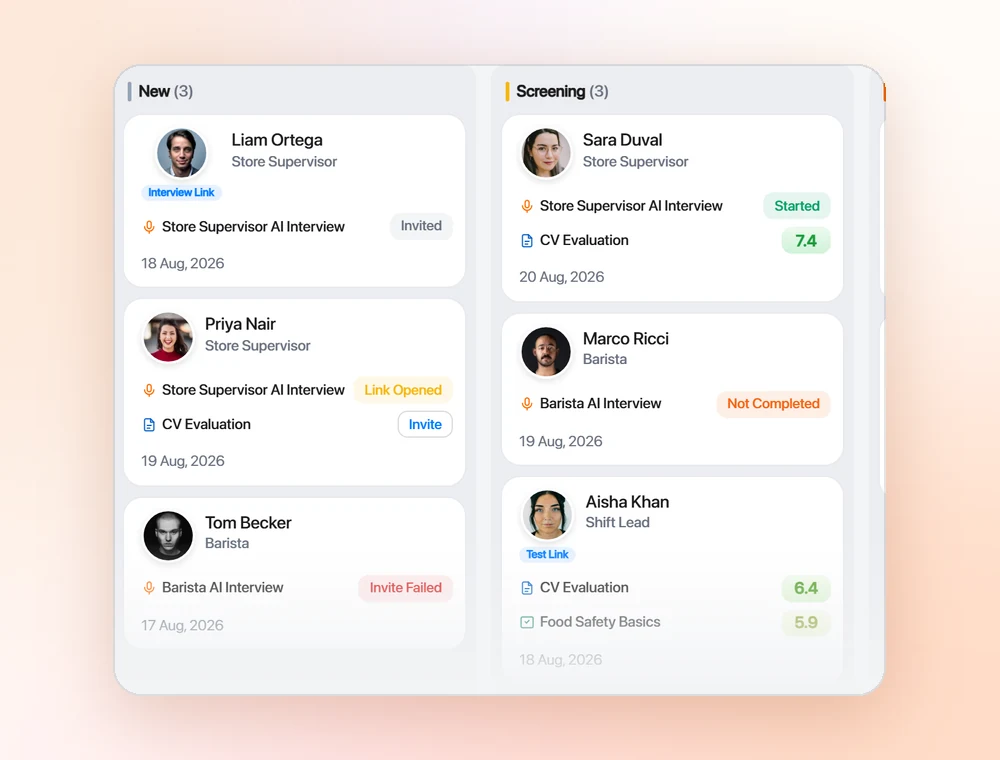
| System of record | Research workspace[6] | Hiring project and applicant tracker |


 Overall score
Ask the report to support the decision it was designed for. A research team needs to understand the range of experiences, including minority views and unexpected findings. A hiring manager needs to know which required skills a particular person demonstrated. A concise summary can serve either use, but the underlying evidence and review standard are different.
For a TheySaid study, inspect whether the summary preserves disagreement rather than turning every response into one averaged conclusion. Trace an important finding back to individual answers and identify how many participants support it. Avoid presenting qualitative themes as statistically representative without an appropriate research design. The AI's ability to summarize does not determine the validity of the study.
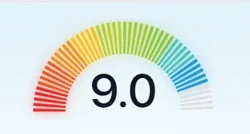
For Flowmingo, inspect why a criterion received its rating and whether the answer supports that interpretation. Its overall score reflects configured importance; it is not a probability of job success. Do not repurpose a research transcript into a candidate ranking without establishing an appropriate assessment process. The original consent and question design may not support that use.
Integrations and workflow
| What | TheySaid | |
|---|---|---|
| Workspace | Research interviews, surveys, forms and user testing[6] | AI interviews, Technical Tests and hiring projects |
| Business integrations | CRM, support and collaboration connections described[1] | API, webhooks and MCP for custom integrations |
| Recruitment record | No ATS assessment workflow established by reviewed sources | Built-in applicant stages and team review |
| Conversation actions | Configured calendar, review or support links[1] | Hiring workflow and applicant communication |
| Collaboration | Research seats and workspace permissions vary by package[2] | Unlimited team members with workspace roles |
| Combined use | Research the experience of your hiring process | Assess applicants within that hiring process |
A research integration usually sends a different kind of information. A customer-success team may want a feedback theme in its CRM or a support issue in its ticket system. A recruiter needs an assessment linked to the right application. Confirm the destination and purpose of the data rather than treating every integration list as equivalent[1].
The tools can be complementary. Use Flowmingo to run the assessment and TheySaid to investigate whether candidates understood the instructions or felt prepared. Keep the study data and hiring evidence governed separately, particularly when the study is anonymous. Do not promise that an anonymous response can also be traced back to an applicant for individual follow-up.
If the actual requirement is a job-application form, define the fields and next step before buying an AI interview product. TheySaid's research interview supports collecting responses, but the reviewed product does not establish candidate scoring, ATS progression or an autonomous hiring workflow. A form, research interview and assessment should each be evaluated for the task they perform[1].
Scoring, oversight and candidate data
Match consent and data handling to the purpose of the conversation
TheySaid publishes security information and describes anonymous-mode behavior for AI Interviews. Flowmingo publishes privacy and processing terms for its hiring workflow. Neither product's public materials should be converted into an unqualified claim of legal compliance for every employer or research study[1,4].
Define the audience for the answers before collecting them. Employee or candidate-experience feedback may contain sensitive criticism that was never intended for a hiring manager's individual assessment. Decide who can see raw responses, who receives aggregated findings and whether identifiers are needed. The invitation and actual configuration should tell the same story.
Check deletion across connected systems as well as the original workspace. A deleted voice recording may leave a transcript, summary or exported finding elsewhere. Establish which records must remain for the stated purpose and who handles participant requests. Security documentation is useful evidence to review, but it does not replace those configuration decisions.
| What | TheySaid | |
|---|---|---|
| Purpose | Research and participant feedback[1] | Candidate assessment |
| Identity | Anonymous or identified research settings need review[1] | Applicant-linked interview evidence |
| Recording | Anonymous-mode audio deletion after transcription[1] | Plan-dependent video retention |
| Security review | Request current documentation and scope[4] | Review DPA, privacy terms and required evidence |
| Access | Set research-team and integration permissions | Owner, Admin and Member roles |
| Reuse | Confirm permission before using research for another purpose | Keep hiring decisions tied to the agreed assessment |
Which should you choose?
| If you are | Pick | Why |
|---|---|---|
| You want customer-discovery conversations | TheySaid | TheySaid is designed for qualitative learning and follow-up research[1]. |
| You want to assess applicants against a role | Flowmingo | Questions, criteria, scores and hiring evidence are central to the workflow. |
| You need candidate-experience feedback | TheySaid | A research study can explore friction separately from applicant scoring[1]. |
| You need a free hiring tracker | Flowmingo | Hiring projects, stages and team review are included. |
| You need typed and spoken research participation | TheySaid | TheySaid exposes those interview settings[1]. |
| You need executable coding assessment | Flowmingo | Technical Tests provide a hiring assessment workflow with code execution. |
| You want to improve an existing hiring process | Either | Use research to understand experience and assessment evidence to evaluate applicants. |
| You need anonymous feedback | TheySaid | Evaluate TheySaid's anonymous mode and its recording behavior[1]. |
Moving from TheySaid: test one role first
Before switching tools, establish whether the project is research or candidate assessment. If it contains both, pilot them as separate workflows with separate participant messages.
- Write the decision in one sentenceSpecify whether the team needs to learn why people behave a certain way or assess whether an applicant meets a role requirement.
- Prepare questions for that purposeCreate open research questions for discovery, or job-related questions and criteria for hiring. Review follow-ups for leading or irrelevant prompts.
- Verify the participant and data journeyCheck voice settings, identity, consent, recording behavior and who receives the result. Confirm the exact plan entitlement before collecting a full cohort.
- Judge the output against its intended useFor research, trace findings to participant answers. For hiring, trace scores to evidence. Do not use one output as an unsupported substitute for the other.
Pilot it on 1 role this week. Unlimited AI interviews in 60+ languages, for $0.
Start Hiring FreeThe full comparison, point by point
For the procurement checklist: all 36 points, with a source on each. Open a group.
Price and plan limits6 points
| What | TheySaid | |
|---|---|---|
| Free access | Survey page lists 50 monthly responses and one active project[2] | Unlimited AI interviews, projects and team members |
| Entry paid plan | Essential listed at US$49/month with 250 responses[2] | Starter US$49/month |
| Pro | US$149/month; confirm response and AI Interview entitlement[2] | Growth US$99/month |
| Team or enterprise | Team from US$499/month; other enterprise terms quoted[2,3] | Match required branding, retention and sharing to plan |
| Usage unit | Responses, projects and research-specific allowances[2,3] | Interview volume is unlimited on every plan |
| Research seats | Seat limits differ by package[2] | Unlimited hiring-team members |
The interview6 points
| What | TheySaid | |
|---|---|---|
| Starting point | Research goal and interview questions[1] | Job description, questions and assessment criteria |
| Follow-ups | Configurable depth per question[1] | Adaptive follow-ups during the spoken interview |
| Response mode | Voice or typed participation, depending on settings[1] | Spoken asynchronous browser interview |
| Logic | Research branching and configured conversation actions[1] | Role-based interview and evaluation setup |
| Success measure | Depth and usefulness of participant insight | Evidence of the applicant's skills and experience |
| Evaluation | Qualitative research output[6] | Criterion ratings with written reasons |
Candidate experience6 points
| What | TheySaid | |
|---|---|---|
| Person's role | Research respondent or participant[1] | Job applicant |
| Purpose disclosed | Feedback, discovery or research study | Role-specific hiring assessment |
| Voice settings | Moderator voice and respondent voice configurable[1] | Spoken AI interview; browser device check |
| Anonymous mode | Voice recording deleted after transcription in anonymous mode[1] | Candidate evidence remains linked to the hiring record |
| Delivery | Research distribution and configured links[1] | Email; eligible paid WhatsApp invitations with credits |
| After completion | Research follow-up or configured action[1] | Recruiter reviews evidence and communicates next steps |
Reports and evaluation6 points
| What | TheySaid | |
|---|---|---|
| Unit of analysis | Participant responses and patterns across research[6] | Individual candidate against role criteria |
| Main output | Qualitative themes and findings | Strengths, gaps, scores and reasons |
| Transcript | Research conversation record[1] | Interview transcript with recorded answers |
| Comparison | Find patterns and differences among participants | Compare evidence relevant to the same role |
| Next action | Improve a product, experience or research decision | Invite, review or advance a candidate |
| System of record | Research workspace[6] | Hiring project and applicant tracker |
Integrations and team6 points
| What | TheySaid | |
|---|---|---|
| Workspace | Research interviews, surveys, forms and user testing[6] | AI interviews, Technical Tests and hiring projects |
| Business integrations | CRM, support and collaboration connections described[1] | API, webhooks and MCP for custom integrations |
| Recruitment record | No ATS assessment workflow established by reviewed sources | Built-in applicant stages and team review |
| Conversation actions | Configured calendar, review or support links[1] | Hiring workflow and applicant communication |
| Collaboration | Research seats and workspace permissions vary by package[2] | Unlimited team members with workspace roles |
| Combined use | Research the experience of your hiring process | Assess applicants within that hiring process |
Oversight and candidate data6 points
| What | TheySaid | |
|---|---|---|
| Purpose | Research and participant feedback[1] | Candidate assessment |
| Identity | Anonymous or identified research settings need review[1] | Applicant-linked interview evidence |
| Recording | Anonymous-mode audio deletion after transcription[1] | Plan-dependent video retention |
| Security review | Request current documentation and scope[4] | Review DPA, privacy terms and required evidence |
| Access | Set research-team and integration permissions | Owner, Admin and Member roles |
| Reuse | Confirm permission before using research for another purpose | Keep hiring decisions tied to the agreed assessment |
Questions buyers ask
Is TheySaid a direct replacement for a candidate assessment tool?
The reviewed product focuses on qualitative research. Its research interviews do not establish a role-scoring or ATS assessment workflow[1].
Can HR teams use TheySaid?
Yes, a research tool can help explore employee feedback or candidate experience. Keep that purpose distinct from evaluating individual applicants for a job[1].
Does the free response allowance mean free advanced AI interviews?
Do not assume that. The pricing pages describe several project types and packages; confirm the AI Interview entitlement and response rules for the intended study[2,3].
Can Flowmingo and TheySaid be used together?
Yes. An employer could assess applicants in Flowmingo and separately research their experience with TheySaid. Keep consent, access and research findings separate from individual hiring evidence.
Sources and method
This comparison was updated on 4 Oct 2026. Competitor claims link to TheySaid's own pages or a named third party; ratings carry their own checked dates. Flowmingo facts come from our pricing, the AI Interviewer page, a sample report, our Data Processing Agreement and our Privacy Policy. Spotted something out of date? Tell us below and we fix it.
All 5 sources
- 1 TheySaid: AI Interviews and Evo moderator. theysaid.io
- 2 TheySaid: survey and research pricing. theysaid.io
- 3 TheySaid: user-testing and enterprise pricing. theysaid.io
- 4 TheySaid: security information. theysaid.io
- 6 TheySaid: research platform. theysaid.io
What changed, and when
- Added a sourced comparison of the current product, commercial terms, interview experience, review evidence and workflow fit. Vendor statements are distinguished from hands-on validation.